
Rabbit Daily Feed & Nutrition Calculator
Scientifically calibrated daily portion guide for timothy pellets, grass hay bulk, dark leafy greens, and water intake based on body weight and reproductive status.
Daily Calibrated Rations
The 80–85% Indigestible Crude Fiber Mandate
The domestic rabbit is an obligate hindgut fermenter equipped with a specialized cecum that hosts a complex anaerobic microbiome. Unlike ruminants, rabbits depend on large particles of indigestible crude fiber (minimum 20% to 25% of dry matter) to stimulate continuous peristaltic contractions in the colon.
Without unlimited long-stem grass hay, gastrointestinal transit times slow precipitously, leading to cecal dysbiosis, gas accumulation, and life-threatening gastrointestinal stasis. Furthermore, continuous mastication of abrasive silica phytoliths present in grass hay is biologically necessary to wear down open-rooted hypsodont incisors and cheek teeth, preventing painful malocclusions.
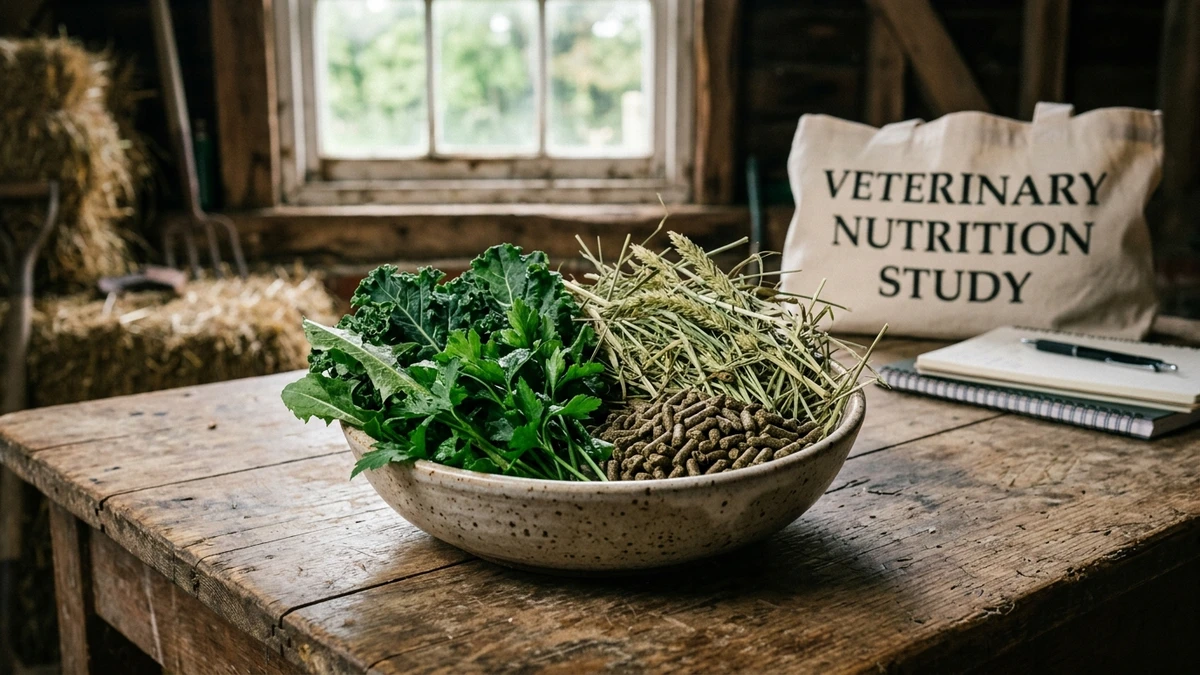
Pellet Ration Discipline Across Physiological Life Stages
Commercial pellets were originally formulated for meat production rabbitries to achieve rapid juvenile weight gain. When fed ad libitum to adult companion or breeding stock, high-carbohydrate pellets lead to hepatic lipidosis, pododermatitis, and selective foraging that excludes essential hay.
| Life Stage | Pellet Type | Daily Serving Ratio | Forage Type |
|---|---|---|---|
| Adult Maintenance | 14–16% Protein Timothy | 1/4 cup per 5 lbs body weight | Unlimited Timothy / Orchard Grass |
| Pregnant Doe (D21+) | 16–18% Protein Blend | 1/2 cup per 5 lbs body weight | Timothy + 25% Alfalfa Mix |
| Nursing Doe | 18% Protein Commercial | Free-choice (ad libitum) | Alfalfa Hay + Timothy Grass |
| Growing Junior (<7m) | 16–18% Protein Alfalfa | Free-choice through 4 months | Alfalfa Hay until 6–7 months |
| Geriatric Senior | 14% High-Fiber Timothy | Adjusted to body condition score | Soft 2nd Cut Meadow Hay |
Statutory Nutrition Verification Matrix
Dietary standards conform to the National Research Council (NRC) Nutrient Requirements of Rabbits and House Rabbit Society clinical protocols.
| Nutritional Parameter | Recommended Dietary Level | Physiological Function & Citation |
|---|---|---|
| Crude Fiber (Minimum) | 18.0% to 22.0% | Maintains cecal motility; NRC Nutrient Requirements |
| Crude Protein (Adults) | 12.0% to 14.0% | Tissue repair without renal strain; Harkness & Wagner |
| Dietary Calcium | 0.6% to 0.9% (Adults) | Prevents hypercalciuria; Harcourt-Brown Vet Medicine |
| Daily Hydration | 50 to 100 ml per kg weight | Prevents kidney calcification; BVA Guidelines |
Frequently Asked Questions About Rabbit Nutrition
01How many pellets should an adult rabbit eat per day?
An adult maintenance rabbit requires approximately 1/4 cup (1.5 to 2.0 ounces or 40 to 55 grams) of high-fiber timothy pellets per 5 pounds of body weight daily. Overfeeding pellets is the leading cause of obesity, dental disease, and cecotrope soiling.
02What percentage of a rabbit's diet must be grass hay?
Fresh grass hay (such as First or Second Cut Timothy, Orchard Grass, or Meadow Hay) must comprise a minimum of 80% to 85% of an adult rabbit's total daily intake. Unlimited hay provides long-stem indigestible crude fiber vital for continuous cecal motility and molar wear.
03Can I feed alfalfa hay to adult rabbits?
Alfalfa hay is a high-protein, high-calcium legume hay unsuitable as a primary forage for adult maintenance rabbits because excess calcium causes urinary bladder sludge and stones. Alfalfa is strictly reserved for growing kits under 7 months, pregnant does in their second trimester, and nursing does.
04How much fresh water does a rabbit require every 24 hours?
A healthy rabbit consumes between 50 and 100 ml of fresh water per kilogram of body weight daily (approximately 0.75 to 1.5 fluid ounces per pound). A 6-pound rabbit drinks as much water daily as a 20-pound dog. In temperatures above 85°F (29°C), hydration demands increase by 50%.
05Which fresh vegetables and dark leafy greens are safe for rabbits?
Safe staple greens include romaine lettuce, green leaf lettuce, cilantro, Italian parsley, dill, basil, and mint, offered at 1 packed cup per 2 pounds of body weight daily. Avoid iceberg lettuce, which contains lactucarium that causes severe diarrhea.
06What are the earliest clinical warning signs of gastrointestinal stasis?
Early warning signs of GI stasis include refusal to eat pellets or favorite greens, small dry or misshapen fecal pellets, complete absence of stool for 6 to 12 hours, hunched posture, and teeth grinding from abdominal discomfort. Stasis requires immediate veterinary intervention.